Rubber / EPDM Roofing · Syracuse, NY
Rubber Roofing & EPDM Roofing in Syracuse, NY
When homeowners say "rubber roofing," they're almost always referring to EPDM — a durable synthetic rubber membrane used on flat and low-slope roofs. We install, repair, and replace EPDM rubber roofs on Syracuse homes and commercial buildings where shingles aren't an option.
Get Your Free Roofing Estimate in Syracuse, NY
Tell us about your roof — replacement, repair, metal, rubber, or commercial — and we'll get back to you with a clear, no-pressure estimate from a local Syracuse roofing contractor.
What Syracuse Homeowners Say About Home Pro Roofing
Reviews from homeowners and property owners across Syracuse and Central New York.
What Is EPDM Rubber Roofing?
EPDM is a synthetic rubber membrane manufactured in large sheets and used on flat and low-slope roofs. The sheets are bonded together at the seams and sealed around penetrations, edges, and flashing. It's been a standard flat roof material for decades.
The reason it's so common is simple: it works. EPDM stays flexible in cold weather, resists UV and temperature swings, and handles the freeze-thaw cycles that Central New York throws at a roof all winter. For flat sections of a roof where water can't run off quickly, it's a dependable choice.
Rubber roofing overlaps with our broader commercial roofing services, since many commercial buildings use EPDM and other flat roof systems.
Residential Applications
On homes, EPDM is common on flat-roof porches, additions, garages, and low-slope sections where shingles can't shed water effectively. If you have a section of roof that's nearly flat and keeps leaking, rubber roofing is often the right fix.
Commercial Applications
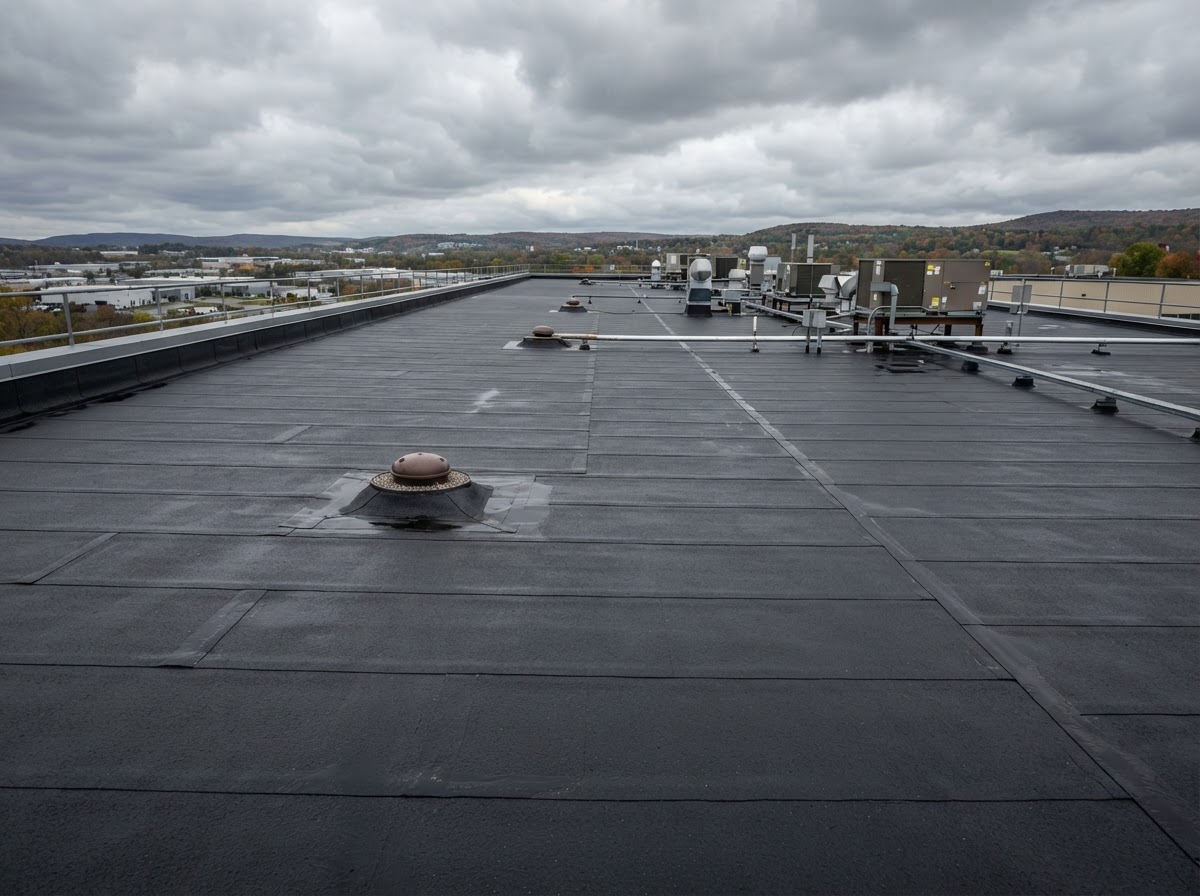
EPDM is widely used on commercial flat roofs across Syracuse. It covers large roof areas economically and handles the penetrations, HVAC units, and drainage details typical of commercial buildings.
Advantages
Benefits of EPDM Rubber Roofing
Why EPDM is a go-to for flat and low-slope roofs in Syracuse.
Cold-Weather Flexibility
EPDM stays flexible in freezing temperatures, resisting the cracking that stiffer membranes can suffer in CNY winters.
Proven Durability
Decades of use on flat roofs back EPDM as a reliable membrane when properly installed and maintained.
Handles Ponding Better
EPDM tolerates standing water better than many systems, though drainage should still be addressed.
Repairable
Seams, punctures, and flashing can be repaired without replacing the whole roof, extending its service life.
Rubber Roof Repair & Common Issues
Most EPDM leaks trace back to seams that have separated, punctures from foot traffic or debris, flashing that's pulled loose as the membrane shrinks over time, or drainage problems that leave water ponding on the roof. The good news is these are repairable without replacing the whole membrane.
We inspect the seams, flashing, penetrations, and drainage to find where water is actually getting in. If the membrane is sound, we repair the failed area. If it's failing broadly, we'll talk about rubber roof replacement.
- Separated or failing seams
- Punctures and membrane damage
- Flashing failures at edges and penetrations
- Ponding water and drainage problems
- Shrinkage pulling at flashing
Material Comparison
EPDM vs. TPO
Two common flat roof membranes — here's the honest difference.
EPDM (Rubber)
Black rubber membrane, bonded seams. Long track record, excellent cold-weather flexibility, and handles ponding water well. A proven choice for Syracuse's climate.
TPO
White thermoplastic membrane, heat-welded seams. More reflective, which can help with cooling load. Welded seams can be very strong when done right. Often used on commercial flat roofs.
Both are legitimate flat roof systems. We recommend based on your roof, budget, and what matters most for the property. See our commercial roofing page for more on flat roof systems.
Questions
Rubber Roofing FAQ
Have a Flat or Low-Slope Roof?
Whether it's a porch, an addition, or a commercial building, we'll inspect it and tell you whether EPDM is the right fit.